Who Is Benjy Russell
I think of Benjy Russell as the kind of name that hums in the background of a symphony, low and steady, shaping the melody without demanding the spotlight. He is best known as the older brother of Formula 1 driver George Russell, yet his own story stands comfortably on its own two feet. In British karting circles, Benjy earned serious respect in the mid 2000s with results that still get nods from those who follow the sport closely. His peak came in 2007, a year that felt like lightning in a bottle. He won the Super One Series in Rotax Max, then sealed his credentials by taking the Rotax Max Challenge Grand Finals in Senior Max. In a discipline where tenths and thousandths separate hopefuls from champions, those wins were unmistakable statements.
Early Karting Years and Peak Season
It started earlier of course. If you trace the threads back through the early 2000s, you find Benjy racing in junior categories, building up craft and confidence. Karting is a crucible. Engines whine, rubber sings, and young drivers learn how to dance with grip at the limit. Benjy developed in that arena, chalking up podiums at headline British events and becoming a fixture on the grids that matter. The climb was steady. The form improved. Then came 2007, his defining season, fused with pace and presence.
That year reads like a highlight reel. Benjy took the Super One Rotax Max title, a championship that asks for consistency as much as raw speed. He also won the Rotax Grand Finals in Senior Max, a crowning performance that put him on the worldwide karting map. Add podiums at Kartmasters, plus hard fought weekends across the national calendar. If karting careers had constellations, 2007 would be the flare that marks his name.
Influence on George Russell
There is a line that runs directly from Benjy’s kart to George’s Formula 1 car. George has spoken often about how his older brother set the tone. The family went to circuits together. They learned the rhythms of early starts and long drives, the quick scrambles for tools and tires, the shared language of speed. Benjy’s number became a piece of lore. George adopted his brother’s kart number, 63, and took it with him all the way to the F1 grid. Numbers can feel like talismans. In this case, it is simply a tribute, a quiet signal of origin that shines on the world stage.
The Russell Family Portrait
I picture the Russell family as a trackside team in its purest form, all hands in, everyone part of the fabric. Steve Russell and Alison Russell, the parents, appear often in stories about the family. They supported their kids through those early racing years, balancing everyday life with the practical demands of competition. Siblings add color and anchor. Benjy is the older brother. Cara is the sister who shows up in family snapshots and event days, a familiar face in the paddock scenes that accompany George’s races.
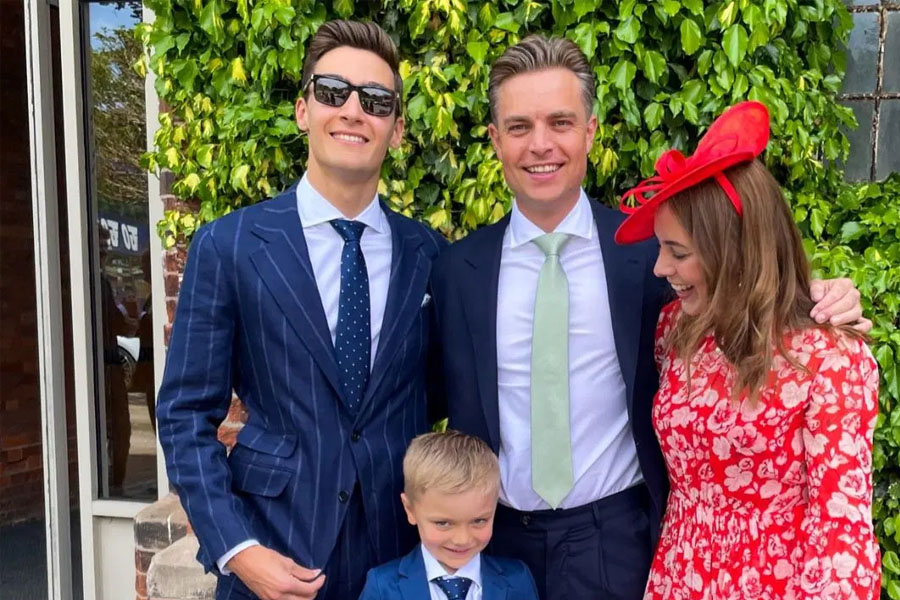
There are small moments that make the picture vivid. A wedding day where a nephew named Leo is in the frame. Smiles gathered after a race weekend. The family in the stands at Silverstone. In these glimpses, the Russell story feels less like a headline and more like a diary, inked with effort, humor, and the kind of support that makes high performance possible.
Beyond the Results
From what is publicly visible, Benjy’s competitive career is defined most clearly by those mid 2000s karting highs. It is equally clear that he chose a more private path afterward. Not every racer reaches for the single seater ladder. Some move into other industries or roles away from public sport. Benjy’s name, when it appears, is often in relation to George’s rise or in retrospective lists of karting champions. There is very little hard detail about his later professional life and that is perfectly fine. Privacy can be a form of peace.
Moments at the Track and Home
I have always believed that karting produces a particular kind of person. You learn economy of motion. You learn the value of tiny adjustments. You learn resilience. Benjy’s story reads like someone who soaked up those lessons and wore them easily. At the track, he had presence, a clean style, and the knack for placing the kart where it needed to be. Off track, there is a sense of family gravity that holds everything together. That combination is rare and quietly powerful.
When George speaks of his brother’s influence, I hear the echo of Saturday mornings spent setting up tents and checking pressures, the smell of fuel in the air, the patient advice offered without drama. I think that is part of why Benjy’s footprint matters, even if it is not splashed across headlines. He helped set the tone and gave shape to a journey that eventually reached Formula 1.
Why Benjy Matters
It is easy to focus on the marquee achievements, yet the texture of motorsport lives in stories like Benjy Russell’s. He was a top tier karting champion in a fiercely competitive era. He was the older brother whose example pointed the way. His number traveled to the pinnacle of the sport, carried by the sibling who followed. The family around them did what great families do. They showed up. They supported. They kept the engines turning.
I find that compelling. It reminds me that racing is not only a contest of speed. It is a tapestry of people and places, of afternoons in the rain and nights spent thinking through the next tiny change to find a tenth. Benjy sits in that tapestry, quietly bright. The wins speak for themselves. The family story amplifies the harmony.
FAQ
Who is Benjy Russell in relation to George Russell
Benjy Russell is the older brother of George Russell. He is a former high level karting driver who achieved major success in the mid 2000s. George credits Benjy as a key influence in his early racing journey.
What are Benjy Russell’s most notable racing achievements
Benjy’s standout year was 2007. He won the Super One Series in Rotax Max and captured the Rotax Max Challenge Grand Finals in Senior Max. He also took podiums at Kartmasters during that period.
Did Benjy Russell pursue single seater racing after karting
There is no public record of Benjy progressing into a prominent single seater career. His widely recognized competitive record centers on his karting achievements in the mid 2000s.
What is the significance of the number 63
George Russell uses the number 63 on his Formula 1 car. He adopted it from Benjy’s kart number, a personal tribute that links George’s professional identity back to his brother’s racing roots.
Who are the other members of the Russell family
The Russell family includes parents Steve and Alison, and siblings Benjy and Cara. They appear together in public moments around race weekends and family events, illustrating a supportive and close knit unit.
Is there information about Benjy Russell’s personal life beyond racing
Public information about Benjy’s personal life is limited. He appears occasionally in family photos and celebrations. A nephew named Leo has been mentioned in connection with a family wedding. Details beyond that remain private.
Why is Benjy Russell often mentioned in coverage about George
Media profiles of George Russell frequently include family context. Benjy’s influence on George’s early racing, along with his own karting achievements, makes him a natural part of the story when outlets recount George’s path to Formula 1.
What makes Benjy Russell’s karting career noteworthy
Karting is fiercely competitive at the top level. Winning both the Super One Rotax Max title and the Rotax Grand Finals in the same period reflects speed, consistency, and race craft. Those achievements place Benjy firmly among the notable British karting champions of his era.