Basic Information
| Detail | Information |
|---|---|
| Full name | Maria Cardoso Quaresma |
| Later names | Mary Perry, Maria Cardoso Quaresma Perry Rottman |
| Born | April 5, 1922 |
| Birthplace | Prainha de Baixo, São Roque do Pico, Pico Island, Azores, Portugal |
| Immigrated to America | 1923 |
| Parents | Manuel Silveira Quaresma and Maria da Conceição Cardoso |
| First husband | Raymond Francis Perry, originally Pereira |
| Second husband | Marvin Glenn Rottman |
| Only child | Stephen Ray “Steve” Perry |
| Son’s birth | January 22, 1949 |
| Died | December 4, 1985 |
| Age at death | 63 |
| Burial place | Calvary Cemetery, Hanford, California |
| Family heritage | Portuguese Azorean |
| Best remembered for | Raising and supporting Steve Perry and encouraging his musical career |
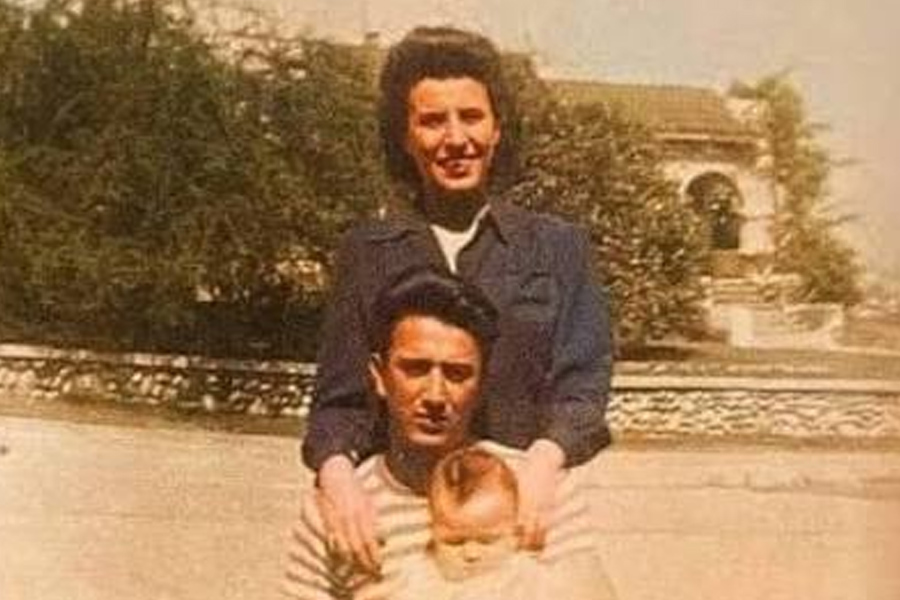
When I look at the story of Mary Quaresma, I see a life that existed mostly away from cameras, record sleeves, concert stages, and celebrity headlines. Yet her influence eventually reached some of the biggest arenas in rock music.
Mary was born Maria Cardoso Quaresma on April 5, 1922, on Pico Island in the Azores, Portugal. Her birthplace is associated with Prainha de Baixo, in the municipality of São Roque do Pico. She was the only child of Manuel Silveira Quaresma and Maria da Conceição Cardoso, and before she was old enough to remember her homeland, her family had crossed the Atlantic.
In 1923, Mary immigrated to the United States with her parents. The family eventually became part of the Portuguese American community in California’s Central Valley, where dairy farming provided their livelihood. By 1930, the Quaresma family was living on a dairy farm in the Hanford Township area of Kings County. By 1940, they had become naturalized American citizens.
That transition from Pico Island to rural California shaped the family story that would eventually produce one of rock music’s most recognizable voices.
Mary Quaresma and Her Portuguese American Roots
Mary’s childhood was surrounded by the sounds, customs, and traditions of an Azorean Portuguese family. Her father, Manuel, worked as a dairy farmer, and the family remained connected to the agricultural communities around Hanford and Lemoore.
The Azores can feel almost mythical when viewed from California, a chain of volcanic islands scattered across the Atlantic. For Mary’s family, however, Pico was home. Its influence did not disappear when they moved to America. Portuguese language, food, family traditions, and community ties continued to form part of their identity.
Mary later passed that cultural inheritance to her only son, Steve Perry.
Steve has spoken about his Portuguese background and has demonstrated his ability to speak Portuguese with an Azorean flavor. One of the most touching pieces of that heritage is the Portuguese phrase “Minha Jóia,” meaning “my jewel.” The phrase became closely associated with Mary’s memory and was eventually placed on her gravestone.
Her story therefore represents more than a family migration. It is also a small portrait of how immigrant traditions can travel across generations, quietly becoming part of an artist’s identity.
Her Parents Manuel and Maria Quaresma
Mary’s parents were Manuel Silveira Quaresma and Maria da Conceição Cardoso, sometimes recorded with variations of their names such as Marie, Maria Cardoza, or Cardoza.
Manuel was born on December 11, 1900, on Pico Island. He married Maria in 1921, and the couple left the Azores with their infant daughter in 1923.
The family established itself in California’s Central Valley and built its life around dairy farming. Manuel remained associated with the agricultural community for decades before eventually retiring in the Pismo Beach area.
Mary’s mother, Maria, was born around 1904 and died on April 8, 1967. She was also buried at Calvary Cemetery in Hanford.
For young Steve Perry, his grandparents became particularly important after his parents divorced. The family dairy farm in the Lemoore area became one of the central settings of his childhood.
It was there that Steve grew up with his mother and grandparents, surrounded by the rhythms of rural California life.
Mary Perry and Raymond Francis Perry
Mary married Raymond Francis Perry, whose original family name was Pereira. Raymond was a vocalist and was associated with local radio station KNGS as a co owner.
Music was already present in Steve’s family before he ever stepped onto a stage.
Raymond’s work as a singer gave his son an early glimpse into performance. Steve reportedly watched his father perform when he was about four years old and had the instinctive thought that he could do the same thing.
But the family story changed when Mary and Raymond divorced while Steve was still a child, around 1956 or 1957.
For Steve, the divorce was painful and formative. Music became something more than entertainment. It became a refuge, almost like a room he could enter whenever the world outside became complicated.
Mary became the parent who remained beside him.
Raising Steve Perry in Lemoore
After the divorce, Mary moved with Steve to her parents’ dairy farm in the Lemoore area. There, she raised her only child while remaining close to her extended family.
Steve’s later career makes those years fascinating to revisit. The future frontman of Journey was not raised in a glamorous music industry environment. His early world was a California farming community, a family with Portuguese roots, and a mother who recognized that music meant something profound to her son.
Mary supported his curiosity rather than dismissing it as a passing teenage obsession.
One of the most famous details involves a gold eighth note pendant she gave Steve for his 12th birthday. He continued to wear the pendant for decades, treating it as a personal good luck charm and a physical reminder of his mother.
That tiny piece of jewelry became almost symbolic of their relationship. Mary gave him something small, but its meaning became enormous.
The Moment Sam Cooke Changed Steve Perry’s Life
If Mary was the emotional foundation of Steve’s early life, Sam Cooke became one of the defining musical forces in his imagination.
Around the age of 12, Steve heard Sam Cooke’s “Cupid” while riding in his mother’s car. The experience was transformative. He later described the intensity of the moment in terms of tunnel vision and tunnel listening.
I find this detail especially cinematic. A young boy in California, sitting in his mother’s car, hears a voice coming through a dashboard speaker and suddenly discovers the future he wants.
Cooke’s influence can be heard in the way Steve approached singing. Soulful phrasing, emotional vulnerability, melodic ornamentation, and an ability to make a powerful note sound intimate all became important elements of Perry’s style.
Cooke was not his only influence, however.
The Musical World That Shaped Steve Perry
Steve’s musical schooling was extensive.
Early favourites included Buddy Holly and the Kingston Trio. Vocal harmony groups like the Flamingos and Drifters also captivated him. He liked the Flamingos’ “I Only Have Eyes for You” for its mood and passion, and the Drifters’ “Under the Boardwalk” for its heartfelt delivery of simple words.
Also important were Beach Boys songs like “In My Room.” Steve related the song to teenage seclusion and his musical world.
Motown, r&b, and soul followed.
Aretha Franklin, Gladys Knight, Marvin Gaye, Jackie Wilson, Joe Tex, Diana Ross, Dee Dee Sharp, and Otis Redding broadened his musical tastes. Technical skill was only half of singing, as their voices demonstrated. The other half felt.
Beatles became another major impact. Steve envisaged making the Beatles’ “I Need You” R&B, showing how readily he mixed British rock with American soul.
Then came Led Zeppelin.
From Sam Cooke to Led Zeppelin
Steve Perry’s influences may seem contradictory at first glance. Sam Cooke and Led Zeppelin occupy very different corners of popular music, yet Perry absorbed elements from both.
He has singled out Led Zeppelin’s “Good Times Bad Times” as a revelation. The rhythm, arrangement, harmonies, songwriting, and sheer energy demonstrated what rock music could become.
Robert Plant’s voice also provided a powerful reference point.
The combination became part of Perry’s own musical vocabulary. Motown provided soul. The Everly Brothers offered harmony and melody. Cooke supplied emotional phrasing. Zeppelin brought power and rock intensity.
That combination eventually became one of the secret ingredients of Journey.
Mary and Steve Perry’s Journey Connection
By the 1970s, Steve Perry was moving toward the professional career his mother had encouraged.
When Journey’s opportunity arrived, Perry was not initially certain about committing himself to the band. Mary encouraged him to pursue the opportunity rather than turn away from it.
That encouragement became particularly meaningful because Mary would not live to see the full arc of what her son accomplished.
During the production of Journey’s Raised on Radio, released in 1986, Mary became seriously ill. Accounts describe neurological problems and Steve’s repeated efforts to spend time with her while recording continued.
The image is heartbreaking. Steve was working on an album that would become another important chapter in Journey’s history while simultaneously trying to remain close to his mother.
He reportedly made extraordinary efforts to visit her, including traveling by helicopter in one recollection.
Mary still encouraged him to continue.
She died on December 4, 1985, in Lemoore, California, at only 63 years old.
Mary Quaresma’s Final Resting Place
Mary was buried at Calvary Cemetery in Hanford, California, close to the Central Valley community where her family’s American story had taken root.
Her gravestone carries words that capture the intimacy of her relationship with her son:
“WE LOVE YOU MAMA”
It also includes:
“YOU WERE, AND ALWAYS WILL BE”
And then comes the Portuguese expression:
“Minha Jóia”
My jewel.
Those words transform the grave marker from a simple record of a life into a message of enduring affection. The phrase also echoes the Portuguese heritage Mary carried from Pico Island and passed to her son.
Marvin Glenn Rottman and Mary’s Later Life
Mary married Marvin Glenn Rottman on June 8, 1963, in Clark County, Nevada.
Compared with Steve Perry’s later celebrity, remarkably little is publicly documented about Marvin. He remained a relatively private figure, and most references to him appear in family timelines and marriage records.
Mary continued to be associated with the Lemoore and Hanford area. Her life remained centered on family rather than public attention.
There is no substantial public record of a separate celebrity career, major business empire, or independent public persona. Her significance comes from something much more personal.
She was the person who raised Steve Perry.
Steve Perry After Mary’s Death
Steve continued working on Raised on Radio after Mary’s death. The timing made the album inseparable from one of the most painful periods of his life.
Perry’s voice had always carried a striking mixture of strength and vulnerability. Knowing the circumstances surrounding Mary’s final illness adds another layer to the emotional intensity listeners may hear in his work.
His music was never simply about hitting the highest note.
The emotional architecture underneath it was built from family, separation, longing, romance, grief, faith, and resilience.
Mary was part of that architecture.
A Family Story Hidden Inside Rock History
The larger Perry family story stretches from Pico Island to the dairy farms of California and eventually to sold out arenas around the world.
Manuel and Maria Quaresma crossed the Atlantic with their infant daughter in 1923. Their daughter Mary grew up between Portuguese traditions and American life. Mary became the mother of Steve Perry in 1949. Steve absorbed his family’s cultural heritage while discovering soul, R&B, pop, and rock.
By the time he joined Journey, those influences had fused into a voice capable of moving from whisper soft intimacy to arena shaking power.
The family tree therefore carries an unusual musical journey of its own.
A farmer from Pico Island could hardly have known that his granddaughter’s son would one day become the voice behind songs heard by millions.
Yet that is precisely how family history works. Sometimes the biggest chapters begin quietly.
Mary’s Lasting Influence on Steve Perry
Mary influences several areas.
She comforted Steve after his parents divorced. She encouraged his musical interests. His lasting memento was the eighth note necklace she gave him. She encouraged him when Journey called. She was emotionally there for his best professional possibilities despite chronic sickness.
Most significantly, she helped Steve see music as more than a pastime.
It may be his life.
Steve’s Portuguese heritage also preserved her impact. Language, family memories, and “Minha Jóia,” Mary persisted in his artistic and personal vocabulary.
Family Timeline
| Year | Family Event |
|---|---|
| 1900 | Manuel Silveira Quaresma is born on Pico Island |
| 1921 | Manuel Quaresma marries Maria da Conceição Cardoso |
| 1922 | Maria Cardoso Quaresma is born on April 5 |
| 1923 | Mary immigrates to the United States with her parents |
| 1930 | The family is living on a dairy farm in Kings County |
| 1940 | The family is living in California as naturalized citizens |
| Around 1941 | Mary marries Raymond Francis Perry |
| 1949 | Stephen Ray Perry is born in Hanford on January 22 |
| Around 1956 to 1957 | Mary and Raymond divorce |
| Early 1960s | Mary raises Steve in the Lemoore area |
| 1963 | Mary marries Marvin Glenn Rottman |
| 1970s | Steve develops his professional music career and joins Journey |
| 1985 | Mary becomes seriously ill during the Raised on Radio period |
| December 4, 1985 | Mary dies in Lemoore at age 63 |
| 1986 | Journey releases Raised on Radio |
FAQ
Who was Mary Quaresma?
Mary Quaresma, born Maria Cardoso Quaresma, was a Portuguese American woman from the Azores and the mother of Journey singer Steve Perry. She spent most of her life away from the public spotlight and is remembered primarily for raising and supporting her son.
When was Mary Quaresma born?
Mary was born on April 5, 1922, on Pico Island in the Azores, Portugal. She immigrated to the United States with her parents as an infant in 1923.
Who were Mary Quaresma’s parents?
Her parents were Manuel Silveira Quaresma and Maria da Conceição Cardoso. They were Portuguese immigrants from Pico Island who established a dairy farming life in California’s Central Valley.
How many children did Mary Quaresma have?
Mary had one child, Stephen Ray Perry, better known as Steve Perry. He was born on January 22, 1949, in Hanford, California.
Who was Mary Quaresma’s first husband?
Her first husband was Raymond Francis Perry, originally Pereira. He was a vocalist and was associated with KNGS radio in the Hanford and Visalia area.
Who was Mary’s second husband?
Mary married Marvin Glenn Rottman on June 8, 1963, in Clark County, Nevada. Public information about their life together is limited.
How did Mary influence Steve Perry’s music?
Mary encouraged Steve’s musical interests from childhood and supported his ambitions as he pursued a professional career. She also encouraged him to continue with Journey when he was uncertain about the opportunity.
What musical artist influenced Steve Perry the most?
Sam Cooke was arguably Steve Perry’s most important early musical influence. Perry has repeatedly discussed how hearing Cooke’s “Cupid” as a boy profoundly changed his understanding of singing.
What other musicians influenced Steve Perry?
His influences included the Flamingos, the Drifters, the Beach Boys, the Everly Brothers, Aretha Franklin, Gladys Knight, Marvin Gaye, Otis Redding, the Beatles, Elvis Presley, Cream, and Led Zeppelin.
What was “Minha Jóia”?
“Minha Jóia” is Portuguese for “my jewel.” Steve Perry wrote an unreleased song in Portuguese associated with his mother, and the phrase also appears on Mary’s gravestone.
When did Mary Quaresma die?
Mary died on December 4, 1985, in Lemoore, California. She was 63 years old.
Where is Mary Quaresma buried?
Mary is buried at Calvary Cemetery in Hanford, California. Her gravestone commemorates her affectionately as “Mama” and includes the Portuguese phrase “Minha Jóia.”
What happened to Mary during the recording of Raised on Radio?
Mary became seriously ill during the period when Journey was working on Raised on Radio. Steve Perry repeatedly tried to remain close to her while continuing his work with the band, and her encouragement helped him continue despite the emotional strain.