Drywall is a sturdy construction panel that is durable and easy to customize. Despite its durability and strength, moisture, movement, and wear and tear can eventually affect its structural integrity. While drywall repair often fixes minor damage, extensive structural defects require complete panel replacement. Here are several factors to consider before deciding whether to repair or replace your damaged drywall:
When To Repair Your Drywall
Drywall repair services help fix minor defects, such as small punctures, nail pops, hairline cracks, and small water stains. A qualified craftsman often repairs small punctures using mesh patches placed directly over the hole or crack. This is followed by applying several mud coats over the mesh patches to secure them and restore the drywall panel’s structural integrity. If done correctly, this creates a paint-ready surface without disrupting any other surface in your home.
Multiple nail pops can weaken your drywall, affecting its overall structural strength and stability. While this is a serious issue, there are simple repairs that restore the nails without replacing the entire drywall. One restorative technique for repairing nail pops is re-driving the nails, screws, or other fasteners. This involves carefully driving the protruding nails back into the drywall. If the nails are damaged, new screws can be added alongside each popped-out nail to improve stability. To create a smooth paint-ready surface, a qualified craftsman often skim-coats the zone.
If your drywall panel has minor water stains and the leakage has been contained, there are simple techniques that can restore it to its original state. One technique is applying stain-blocking primers to conceal the stains. This is followed by applying interior paint that matches the original color of the drywall. These measures are sufficient if the drywall remains firm and stable despite coming into contact with water.
When To Replace Your Drywall
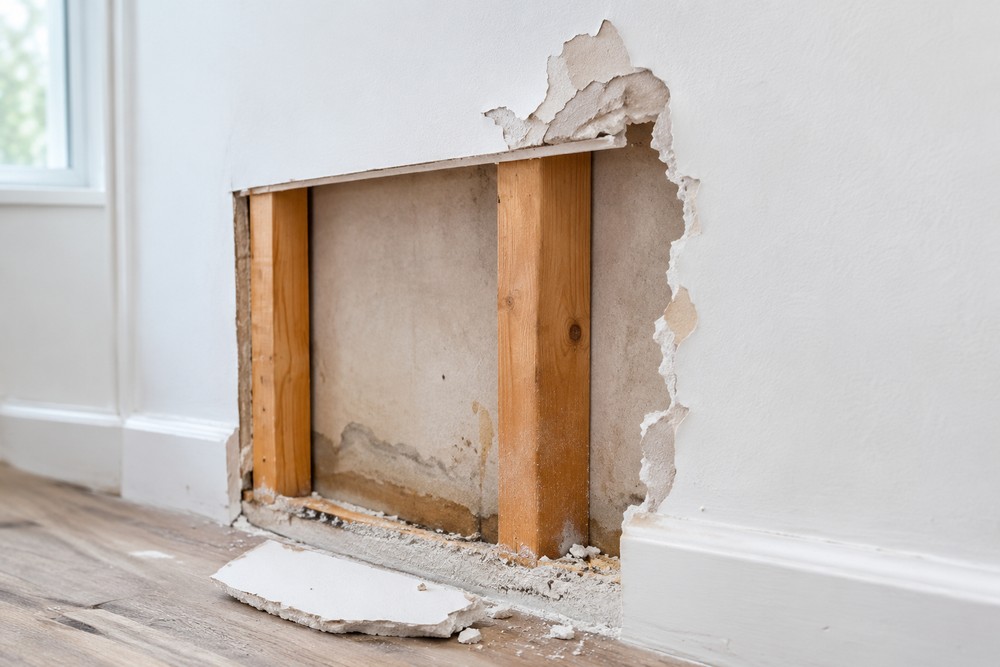
Sometimes drywall damage caused by moisture, mold, and structural remodels is too extensive to be repaired. In those cases, you may need to replace the damaged drywall with new drywall. If the damage has been caused by mold, the affected drywall panel is usually removed and the adjacent parts wiped dry before a new one is installed. This eliminates the mold, enhancing the durability of the newly installed drywall.
If your drywall has soaked in so much moisture that it feels soft to the touch, it has lost its structural integrity and needs to be replaced. To avoid recurrence of the problem, the water leak must be closed before installing a new moisture-resistant board that is properly insulated. Other drywall damage that may require replacement includes crumbling original plaster and major defects on ceilings and walls due to full remodels.
Schedule a Drywall Repair or Replacement Service
Extreme climatic conditions and fluctuations during different seasons, such as winter and summer, often affect drywall due to increased humidity and moisture. This could cause extra wear and tear. A qualified craftsman can help you assess the extent of damage to decide whether to repair or replace it. Schedule a drywall repair or replacement service today.