A Life Shaped by Music and Migration
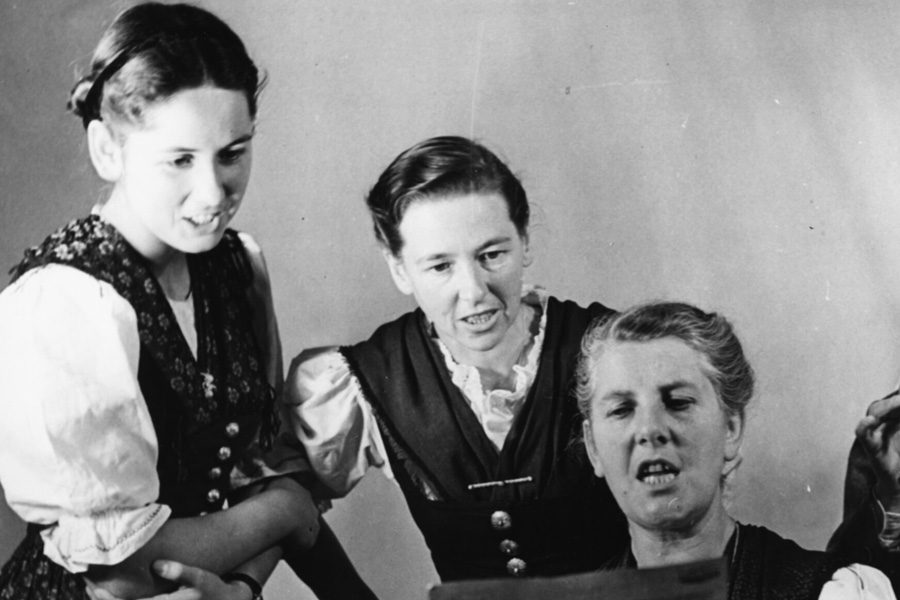
I first came to Eleonore Von Trapp through the familiar doorway of the family legend, the one that has sung its way into living rooms for generations. Yet the person behind that legend felt quieter and more grounded, like a steady harmony holding the melody in place. Born in 1931 in Salzburg, Eleonore grew up in a house where voices were woven together each day, forming a tapestry of sound and faith and discipline. As the family’s world shifted from Austria to America, she moved within that tide, becoming part of the performing ensemble that introduced audiences to an authentic folk and sacred repertoire. Her presence was not theatrical in the modern sense. It was the composure of someone who understood that music could be both livelihood and lifeline.
Parents and the Household of Many Voices
Her father, Georg von Trapp, had once commanded submarines and now commanded scales and rehearsals, guided by a stern devotion to order. Her mother, Maria Augusta Kutschera, brought vitality and religious conviction, shaping the daily rhythms of practice and repertoire. Together, they created a home that felt like a rehearsal hall and a chapel. For Eleonore, this was a childhood set within the arc of migration and cultural translation, from the alpine clarity of Salzburg to the pastoral hills of Vermont. It was a household where discipline rubbed shoulders with joy, where learning a part meant learning how to belong.
Siblings Who Formed a Chorus
What stands out in any account of Eleonore’s life is the constellation of siblings. The seven older children, Rupert, Agathe, Maria Franziska, Werner, Hedwig, Johanna, and Martina, were her half siblings. They formed the original nucleus of the Trapp Family Singers, and Eleonore grew up listening to and then joining their voices. She also had two full siblings, Rosmarie and Johannes, with whom she shared the later chapters of the family story in America. The sound they made together was less about spectacle and more about blend and balance. If the family music has survived, it is because each voice served the whole, like facets on a single stone catching the same light from different angles.
From Spotlight to Hearth Life in Vermont
Vermont was a new kind of stage. By the early 1940s the family had settled in Stowe, turning meadows and woods into a place of work and welcome. Eleonore performed through the 1940s into the early 1950s, then stepped back from the public touring life in 1952. I picture that decision like setting down a well used instrument and lifting an infant. The focus shifted from buses and concert halls to kitchen tables and school runs, from applause to quiet conversations after dinner. In those years the family business grew, guests arrived, seasons turned, and Eleonore’s life moved with a gentle steadiness that never demanded a spotlight.
Marriage and Children
In 1954, Eleonore married Hugh David Campbell, and the name many would see in local notices became Eleonore Von Trapp Campbell. Together they raised a family in Stowe. Accounts of her life in those decades are modest and practical, the kind of stories that do not rush to be dramatic. Seven children, everyday responsibilities, layered commitments that add up to a life of care. Through it all, her identity as one of the singing Trapps persisted, not as a brand but as a thread, quiet and strong, running through family gatherings and community ties.
The Lodge and the Legacy
The Trapp Family Lodge became more than lodging. It was a living chapter of the family narrative, a place where guests sought a touch of alpine spirit and a glimpse of the story behind the songs. Over time, the lodge and related enterprises drew the family into the complicated world of business governance. Disagreements surfaced, as they do in enterprises built on kinship and history. For Eleonore’s generation these tensions were less about public drama and more about navigating inheritance, stewardship, and identity. What I take from that chapter is how legacies can be both blessing and burden, both song and ledger.
Dates and Milestones
Eleonore’s timeline begins in 1931 in Salzburg and runs through the family’s emigration period around 1938 and 1939, then toward Vermont by 1942. The performing arc rises through the 1940s and eases by 1952. Her marriage begins in 1954, followed by decades of family life in Stowe. Georg’s passing in 1947 and Maria’s in 1987 bookend earlier chapters. Later years carried memorials and retrospectives, with Eleonore’s own passing on 17 October 2021. The sequence feels like movements in a symphony, each closing with a cadence that prepares the next.
Eleonore’s Presence Beyond the Legend
I think of Eleonore as a keeper of tone. She was part of the group yet never clamored for the front of the stage. She helped bring to American audiences folk songs and sacred pieces that still sound luminous when sung simply and well. More importantly, she lived the transition from old world to new, embodying a kind of courage that is not theatrical but domestic, the everyday courage of making a home and raising children after the curtain falls. In family photographs she often appears calm, eyes steady, the kind of person who listens first and speaks second, a singer who knows that silence is the partner of sound.
The Real Family in Living Memory
The original seven half siblings remain the well known names in popular retellings, but the three younger children remind me that the family story was larger than the famous film. Rosmarie, Eleonore, and Johannes anchored the later American decades, the ones shaped by hard work and hospitality. Through them, the idea of family music morphed into family enterprise and then into heritage tourism. It is easy to romanticize such a life. It is harder, and more honest, to recognize its effort. Eleonore’s life helps me see that effort clearly.
FAQ
Was Eleonore Von Trapp depicted in the film version of the family story?
No. The film focuses on the seven older children and a simplified timeline. Eleonore was one of the three younger children in real life and does not appear as a character in the movie.
What was Eleonore’s role in the Trapp Family Singers?
She sang as part of the family ensemble during the touring years in the 1940s and into the early 1950s, then stopped performing publicly around 1952 as her life turned toward marriage and raising children.
Who were Eleonore’s parents?
Her father was Georg von Trapp, a former Austrian naval officer, and her mother was Maria Augusta Kutschera, the matriarch whose life became the source for the celebrated story.
How many siblings did Eleonore have?
She had two full siblings, Rosmarie and Johannes, and seven older half siblings, Rupert, Agathe, Maria Franziska, Werner, Hedwig, Johanna, and Martina.
Where did Eleonore live in her later years?
She lived in Vermont, centered in Stowe, where the family established the Trapp Family Lodge and a broader hospitality enterprise.
Did Eleonore marry and have children?
Yes. She married Hugh David Campbell in 1954 and raised seven children, making her home life the heart of her later decades.
What were the notable dates in Eleonore’s life?
She was born in 1931 in Salzburg and died on 17 October 2021. Between those dates lie the family’s emigration to America, years of concert touring, marriage in 1954, and long residence in Vermont.
Was Eleonore involved in family business disputes?
She was part of the generation affected by governance and financial disagreements surrounding the family’s lodge and related enterprises. These matters were about stewardship and ownership within a complex family legacy.