Early Life and Family Roots
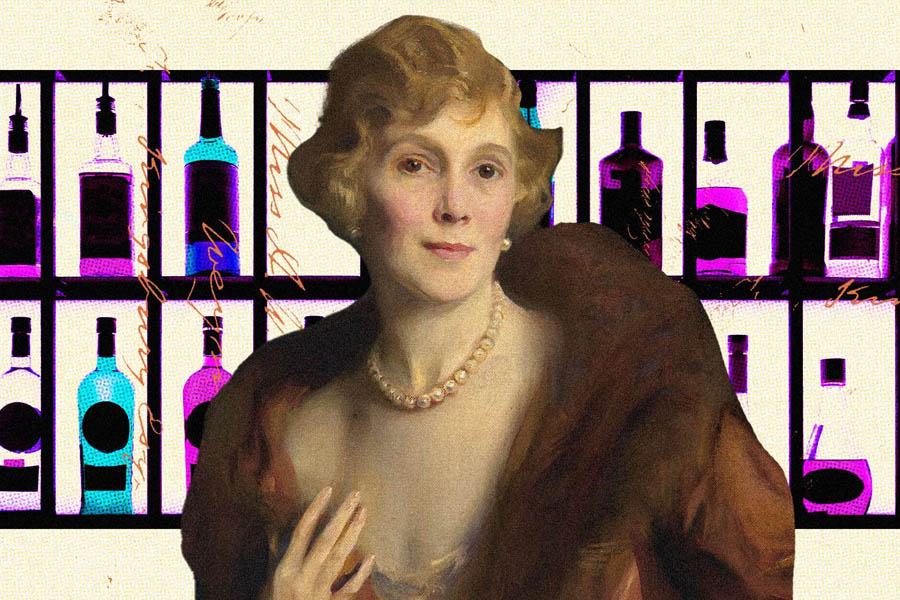
I like to begin with origins, and Pauline Joy Morton Sabin Davis had origins that read like a primer on America’s Gilded Age and early Progressive politics. Born in Chicago on April 23, 1887, she grew up amid the hum of railroads, the etiquette of salons, and the cadence of public office. Her father, Paul Morton, steered the Santa Fe Railway and later served as Secretary of the Navy under Theodore Roosevelt. Her mother, Charlotte Goodridge Morton, ran their social world with grace and steadiness, cultivating the networks that would color Pauline’s future.
The family tree itself glows with civic ambition. Her grandfather Julius Sterling Morton, the visionary behind Arbor Day and a former Secretary of Agriculture, planted more than trees. He planted a sense of duty. Her uncle Joy Morton founded Morton Salt, turning a simple commodity into an American icon. With that heritage, Pauline was not simply positioned for social life in New York. She was primed for influence.
She was the younger of two daughters. While her older sister kept a quieter public presence, Pauline had a spark for leadership. Early exposure to Washington and Wall Street did not merely acquaint her with power. It normalized it. For her, policy and philanthropy felt like rooms she had every right to enter.
From High Society to Public Service
Marriage ushered her into the limelight. In 1907, she wed the financier James Hopkins Smith Jr. The ceremony drew a coterie of luminaries, a sign of the circles she moved in. Two sons followed, Paul Morton Smith in 1908 and James Hopkins Smith III in 1910. The marriage did not last, and in 1914 she struck out on her own, opening an interior decorating business in New York. I admire that pivot. It shows a practical mind, a readiness to translate taste into income and independence.
In 1916, Pauline married banker Charles Hamilton Sabin, president of Guaranty Trust. With him, she stepped deeper into the intersection of politics and finance. Before long she made history as a Republican organizer. She became the first woman on the Suffolk County Republican Committee in 1919 and soon helped build the Women’s National Republican Club. By 1923, she represented New York on the Republican National Committee. In that decade, she learned the mechanics of recruitment and fundraising, honed her voice, and sharpened her instincts. She emerged as a powerhouse who could move crowds and move votes.
The Turning Point on Prohibition
At first, Pauline believed Prohibition might protect families, including her own two boys, from the dangers of alcohol. That sentiment was common, heartfelt, and not naive. But she saw the ground truth. The law was failing in practice. Enforcement faltered. Hypocrisy flourished. Public respect for the law eroded. Crime gained oxygen. What began as an ideal became a mirage.
This is the moment that fascinates me, the hinge of conviction. She did not retreat to polite silence. She recalibrated. And she did it publicly. Pauline resigned from the Republican National Committee in 1929 after the Jones Act stiffened penalties, a step she saw as doubling down on a broken policy. Her decision was not a whisper. It was a trumpet.
Building WONPR and Repeal
In 1929, she founded the Women’s Organization for National Prohibition Reform. WONPR changed the optics and the tone of the repeal movement. Instead of bootleggers and bar owners, Pauline mobilized mothers, professionals, and civic leaders. She reframed repeal as pro family, pro safety, pro law. Under her leadership, membership ballooned to roughly 1.5 million by 1931, surpassing the formidable Women’s Christian Temperance Union. Her arguments were firm and finely cut. She insisted that law should inspire respect, not subversion. She insisted that families needed honesty and practical policy, not sanctimony.
Her image matched her message. Elegant yet direct, she harnessed media attention without theatrics. By 1932 she had become a national symbol of repeal, the well-dressed reformer with a plainspoken creed. In December 1933, the 18th Amendment fell. America recalibrated again.
Pauline’s personal life intertwined with the public story. In 1933, her husband Charles Sabin died, just as the nation was exiting the Prohibition era he opposed. She raised her voice for reform and dignity, then faced loss with fortitude. Even in grief, she kept working. New York politics, including support for reform-minded leadership, carried her forward.
Later Chapters of a Restless Career
Her trajectory after repeal shows a restless energy for civic causes. She joined conservative circles critical of the New Deal, reflecting her belief in limited government and market solutions. During World War II, she directed Red Cross Volunteer Services, coordinating aid to millions. I see a throughline there. It is the same organizational genius, now applied to logistics, relief, and comfort in a time of scarcity and fear.
In 1936, she married Dwight Filley Davis, the former Secretary of War and the man whose name crowns one of tennis’s greatest trophies. With him she stepped into another realm of public life, navigating Washington society once more. After his death in 1945, she continued to serve. In postwar years she lent expertise to historic preservation and consulted on the restoration of the White House during President Truman’s era. She also joined the Committee on the Present Danger in 1950, a reminder that her patriotism carried into the early Cold War.
Pauline died in Washington, D.C., on December 27, 1955. She was 68. Her grave in Southampton lies near Charles Sabin’s. It feels fitting. So much of her life grew out of New York’s shorelines and Washington’s corridors, places where policy and persuasion are always in motion.
The Family Portrait
When I consider Pauline, I also see the constellation of family around her. They mattered, not as footnotes, but as magnets that shaped her path.
- Paul Morton, her father, embodied executive decisiveness and federal service. Through him, Pauline glimpsed the scale of national responsibility.
- Charlotte Goodridge Morton sustained the family’s social architecture. In her house, introductions became alliances.
- Julius Sterling Morton planted trees and civic wisdom. His legacy gave Pauline a sturdy sense of public duty.
- Joy Morton added enterprise. Morton Salt’s reliability mirrors the reliable presence of capital and philanthropy in Pauline’s life.
- James Hopkins Smith Jr., her first husband, was a bridge to finance and society in the 1910s.
- Paul Morton Smith and James Hopkins Smith III, her sons, carried forward the family’s affinity for public service. James would later serve as Assistant Secretary of the Navy for Air in the 1950s.
- Charles Hamilton Sabin, her second husband, linked her to high finance and repeal activism. His death in 1933 marked a poignant chapter amid national change.
- Dwight Filley Davis, her third husband, added civic prestige and a global dimension. Their marriage joined two strong currents of American public life.
This is a family where business, policy, and philanthropy interweave like threads in a tapestry.
Wealth, Image, and Privacy
Exact net worth figures do not survive in the record, and I would not pretend to pluck numbers from thin air. Still, the signs of comfort are clear. Property holdings, a Southampton estate, and a South Carolina plantation all point to a life backed by family money and marriages into influence. She lived with elegance and traveled in important circles, yet she maintained a reputation clean of scandal. Her most contentious public act was a change of heart on Prohibition, a shift that drew anger from temperance activists but earned respect for its integrity and for its persuasive power.
Legacy in Modern Conversations
I notice that Pauline’s name rises on anniversaries like Repeal Day and during women’s history months. Social feeds revisit her speeches about respect for law and the need to face reality, not myth. Podcasts and articles use her story to explore the machinery of reform movements and the role of women in reshaping public policy. She does not trend for gossip or spectacle. She surfaces for the substance of a movement, the grace of an argument, and the proof that style and seriousness can coexist.
FAQ
Who was Pauline Sabin?
Pauline Sabin was a New York socialite, Republican organizer, and the founder of the Women’s Organization for National Prohibition Reform. Born in 1887, she helped lead the national push to repeal Prohibition and later served in wartime volunteer roles and historic preservation. She died in 1955.
Why did she change her stance on Prohibition?
She initially supported Prohibition as a protective measure for families. Over time, she saw that the law worsened crime, weakened respect for legal authority, and encouraged hypocrisy among leaders. Faced with those realities, she concluded that repeal better served families and public trust.
What did the Women’s Organization for National Prohibition Reform accomplish?
WONPR reframed repeal as a civic and family issue. Under Pauline’s leadership, it rapidly grew to a membership in the millions, mobilized women across regions and social classes, and helped convince lawmakers and the public that the 18th Amendment had to go.
What roles did she hold in Republican politics?
She served as the first woman on the Suffolk County Republican Committee, helped build the Women’s National Republican Club, and represented New York on the Republican National Committee. She was known for fundraising, media savvy, and shaping the party’s women’s outreach in the 1920s.
Who were her family members of note?
Her father Paul Morton served as Secretary of the Navy and as a railroad executive. Her grandfather Julius Sterling Morton founded Arbor Day and served as Secretary of Agriculture. Her uncle Joy Morton established Morton Salt. Her husbands were financier James Hopkins Smith Jr., banker Charles Hamilton Sabin, and former Secretary of War Dwight Filley Davis. Her son James Hopkins Smith III later served as Assistant Secretary of the Navy for Air.
Did she face scandals?
Her public image remained largely free of scandal. Critics attacked her shift on Prohibition, but no credible personal controversies followed her through the years. She was respected for her poise and for the principled way she argued for policy change.
Was she wealthy?
She enjoyed significant means from inheritance and marriage. Exact personal net worth is not documented, but the family’s stature and her property holdings suggest long term financial comfort.
How is she remembered today?
She is remembered as a decisive voice in repeal, a pioneering organizer among Republican women, and a model of how elegance and effectiveness can reinforce each other. Her name resurfaces in historical retrospectives, anniversary commemorations, and conversations about women’s leadership in American reform.