A compact biography
Peter Shand Kydd was born on 23 April 1925 and died on 23 March 2006. He was a British businessman heir who chose a farmer’s life, a countryman who occasionally found himself at the heart of historic family dramas. Through his marriage to Frances Shand Kydd, he became stepfather to Diana, Princess of Wales, a role that attached his name to a story larger than any one person. He inherited the Shand Kydd wallpaper business, sold it, and crossed hemispheres to tend sheep in Australia before returning to the rhythms of British rural life. His path reads like a hedgerow shaped by wind and time, practical yet full of quiet turns.
Parents and upbringing
Peter’s parents were Norman Shand Kydd and Frances Madalein Foy. Norman built the wallpaper enterprise that made the family comfortable and gave Peter both an inheritance and a choice. The family’s ties threaded through business circles and well connected milieus, a network that mattered when stories about relatives became national talking points. I picture his early years as closely watched and well supplied, with more expectation than instruction, where learning how to carry a name mattered as much as learning how to run a ledger.
Siblings and half siblings
Among Peter’s closest relations was his half brother William, often called Bill. William became a noted amateur jockey and social figure. His life intersected with the raffish edge of high society, and press stories carried his name through decades of British gossip. Peter’s relationship to William was a reminder that the Shand Kydds were as much a social family as a commercial one, always somewhere between the racecourse and the boardroom.
Marriages and partnerships
Peter married twice and had a third later union reported in the public record. His first wife was Janet Munro Kerr, a woman whose lineage included the physician John Martin Munro Kerr. With Janet, Peter had three children. During this marriage, after selling the family business, he took the leap to a new life in Australia, running sheep on a property named Kooringa near Young in New South Wales.
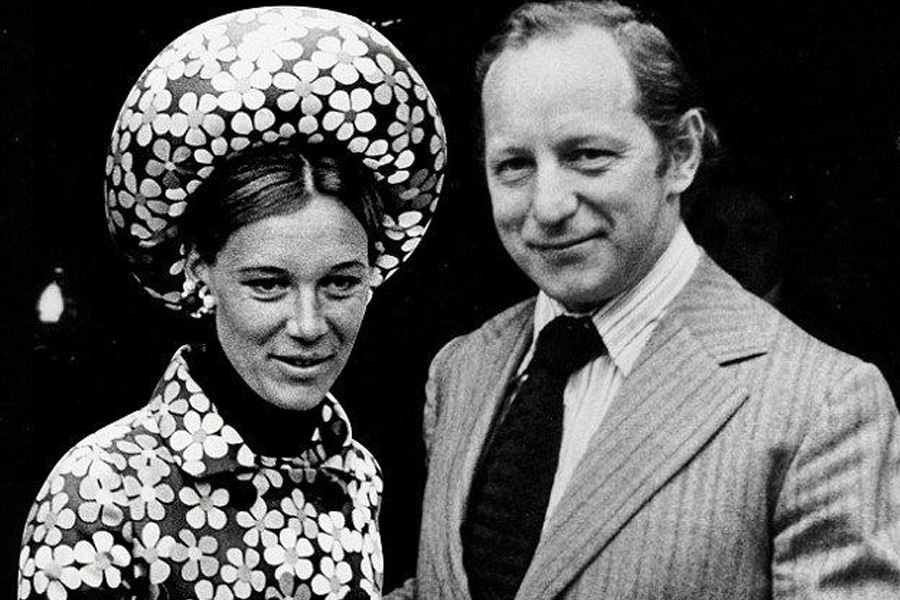
His second marriage defined his place in public memory. On 2 May 1969 he married Frances, formerly Viscountess Althorp, who was the mother of Diana, Princess of Wales. Their union pulled him into the orbit of the Spencer family, and into the relentless glare that followed Diana’s ascent to global fame. The couple lived in Buckinghamshire, at West Itchenor, and later on the island of Seil in Scotland. They separated in 1988 and divorced not long after. Fame can be a tide that surges and ebbs, but it is unforgiving on shorelines where privacy is brittle. I have often thought of their marriage as a study in how public attention frays the edges of domestic life.
Later, Peter is reported to have married Marie-Pierre Palmer in the early 1990s, a relationship that did not last through the mid decade. By then, his public footprint had narrowed. He spent his closing years quietly in Suffolk, a man who had once traded a factory’s hum for pasture’s calm and eventually settled for the slow tempo of coastal English days.
Children
Peter’s three children with Janet were Adam, Angela, and Johnnie. Adam, born in 1954, wrote a novel and later died in Phnom Penh in 2004. His death drew intense coverage and an inquest that left open questions. It was a painful episode for the family, a reminder that notoriety can reappear even when a person seeks distance from it.
Angela chose a private path by comparison, marrying and living largely out of the public eye. That decision has always felt like a counterpoint in the family narrative, a quiet lane against a busy road.
John, known widely as Johnnie, was born in 1959 and became a photographer with exhibitions and works in public collections. His eye captured portraits and moments with a clarity that echoes the family’s own contrasts between light and shadow. If the family name suggested business and society, Johnnie’s images offered a kind of independent reply, visual and reflective.
Stepchildren and the Spencer connection
Through Frances, Peter became stepfather to Diana and her siblings, including Charles Spencer. This role was complicated by the custody disputes and tensions that followed Frances’s separation from John Spencer. Peter’s presence in their lives was often framed by newspaper headlines rather than private diaries. In the larger story of Diana’s childhood, he stood as a figure both inside and outside the domestic fold, part of the upheaval and part of the reassembling that families attempt when marriages end and begin again.
Work, wealth, and the shape of his days
The pivotal move in Peter’s professional life came with selling the Shand Kydd wallpaper company in 1962. It was the kind of decision that multiplies possibilities and risks. He chose agriculture, a world with steadier returns and seasonal patience. Sheep farming in Australia shaped a period that feels almost cinematic to me, the heat and dust a stark contrast to London and the English countryside. Returning to Britain, he managed farms and estates, at one point running a large property on Seil. His public label as an heir never captured the practical skills required to keep livestock, fields, and buildings in line. There is a craft to good land stewardship, a blend of accountancy and weather lore, and Peter leaned into that craft.
Specific figures about his wealth were never fixed in public view, and I have always favored the evidence of land, homes, and choices over any speculative tally. What is clear is that he converted a manufacturing inheritance into a rural life, and later into a quieter chapter that suited a man unconvinced that constant attention is any kind of prize.
Places he called home
Peter’s geography mapped his temperament. London at birth, Australia for work, English counties for family life, and the island of Seil for scale and solitude. Seil’s 1,000 acres felt like more than property. They were sanctuary. Later, Suffolk provided a gentle closing scene, with coastal light, muted seasons, and local ties. Home, for Peter, was less an address than a sense of pace.
Notable moments and turning points
Several dates mark the contours of his life. The sale of the family business in 1962 defined his adult trajectory. The marriage to Frances in 1969 placed him inside one of the country’s most watched families. The separation in 1988 underscored how stress and scrutiny can move from the front page into a kitchen’s quiet. The loss of Adam in 2004 was a sorrow that, once again, unfolded in full view. Frances’s death that same year marked another poignant turn. Peter’s own death in March 2006 closed a story that had been both public and understated, a mixed tapestry of legacy and retreat.
Legacy and public memory
Peter’s legacy does not sit neatly in a single category. He was an heir who chose work that dirtied his hands. He was a husband whose private life shifted the course of other lives. He was a stepfather to Diana, woven into the origin story of a global icon. He was also a man who preferred fields to flashbulbs. When I look back on his arc, I see a figure traveling between weather fronts, catching sunbreaks where he could, and carrying the weight of a surname while trying to live at human scale.
FAQ
Who were Peter Shand Kydd’s parents?
Peter’s parents were Norman Shand Kydd and Frances Madalein Foy. Norman built the wallpaper business that gave the family its fortune, and Frances shaped the home life from which Peter emerged.
How many times did Peter marry?
Peter married twice and later had a third union reported in the public record. His first wife was Janet Munro Kerr, with whom he had three children. His second wife was Frances Shand Kydd, the former Viscountess Althorp. A later marriage to Marie-Pierre Palmer was reported in the early 1990s.
What did Peter do after selling the family business?
After selling the Shand Kydd wallpaper company in 1962, Peter moved to Australia and worked as a sheep farmer near Young in New South Wales. He later returned to Britain and managed farms and estates, including a large property on the island of Seil in Scotland.
How was Peter connected to Princess Diana?
Peter became Diana’s stepfather when he married Diana’s mother, Frances, in 1969. His connection to the Spencer family placed him within the narrative of Diana’s upbringing and the family changes that followed.
Who were Peter’s children?
Peter had three children with his first wife, Janet. Adam, born in 1954, wrote a novel and died in 2004. Angela chose a private life away from the spotlight. John, often called Johnnie, became a photographer with notable exhibitions.
Where did Peter spend his later years?
Peter lived quietly in Suffolk during his final years. He died in Aldeburgh on 23 March 2006.
Did Peter have any notable siblings?
Peter’s half brother, William, known as Bill Shand Kydd, was a well-known amateur jockey and social figure, appearing in various stories tied to British high society.
What is most distinctive about Peter’s life story?
The most distinctive thread is his choice to turn a manufacturing inheritance into a farmer’s life. That decision, paired with his unexpected place in royal-adjacent history, created a life of contrasts. He moved between spotlight and pasture, choosing steadiness over spectacle whenever he could.