Early Life and Playing Days
I have always loved coaches who start from the ground level, learn the craft, then build something sturdy and lasting. Skip Peete fits that mold. Born on January 30, 1963, he took an athlete’s path into football by way of the University of Kansas, where he played wide receiver and earned All Big Eight honors. He learned the feel of route stems and the rhythm of timing throws, but more importantly, he learned how different layers of the game connect. Those lessons seeded a coach’s mind long before he held a whistle.
As a player, he was a study in dependability. No wild theatrics, just a measured pace and consistent hands. That calm confidence becomes most visible later in his coaching, when his backs show patience at the line, footwork that whispers experience, and a presence that suggests they trust the voice in their position room.
Coaching Roots and College Chapter
Peete began coaching as a graduate assistant at Pitt, then moved to position work. There, he met Curtis Martin early in his career and refined running game details. He then taught wide receivers at Michigan State and shaped boundary play for future pros Muhsin Muhammad and Derrick Mason. He added receiver nuance and running back discipline at Rutgers and UCLA. A silent superpower, that blend. Coaches can watch how the perimeter and backfield communicate and how leverage outside can shape movement inside.
By the time Peete joined the NFL, his collegiate resume showed he could teach. He was adaptable, most critically. Consistent results across systems and locker rooms.
The NFL Journey and Impact
The NFL phase of Peete’s career unfolded like a well drawn run script. He settled in with the Oakland Raiders for nearly a decade, coaching running backs with a steady hand and competitive edge. Then came a first stint with the Dallas Cowboys starting in 2007, followed by a stop with the Chicago Bears, time with the Los Angeles Rams, and a return to Dallas in 2020. Across these rooms he cemented a reputation for cultivating discipline and yards after contact, and for shaping backs who understand the geometry of an NFL front seven.
He worked with players who put up headline numbers. Todd Gurley at his peak. DeMarco Murray owning lanes with smooth acceleration. Ezekiel Elliott carving downhill runs with in-phase footwork and controlled violence. What stands out is not just the production, but the consistency of his rooms. Backs coached by Peete tend to look prepared. They play with vision. They pick up blitz with purpose. They finish runs.
The Buccaneers Chapter and Rachaad White
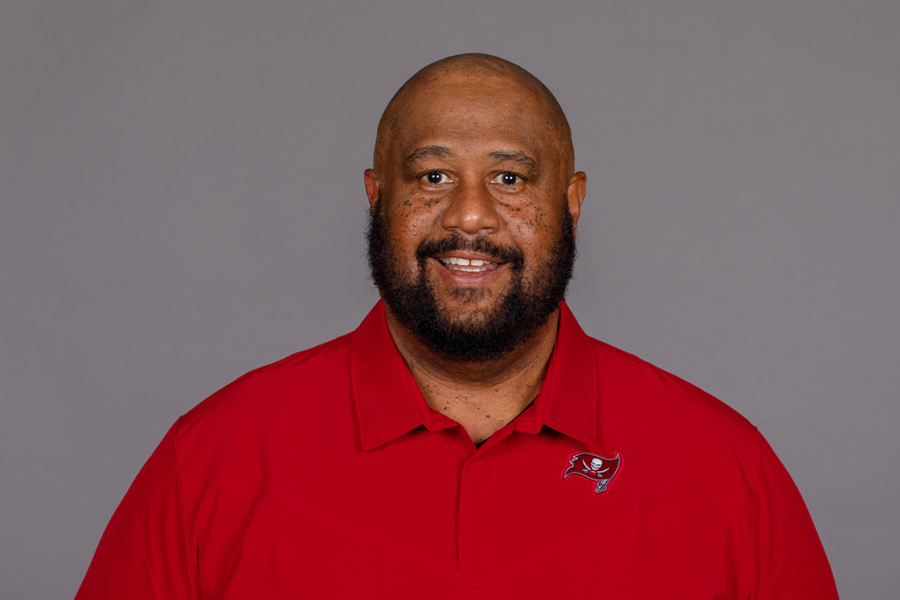
In February 2023, Peete joined the Tampa Bay Buccaneers as the running backs coach. The timing was opportune. Tampa Bay needed efficiency in the run game and dynamism in its backs. Under Peete, Rachaad White expanded from flashes of potential to a full season of high-volume work. He grew into a dual-threat contributor, stacking receiving routes with decisive runs and a patient search for daylight. I saw a player who trusted the read, trusted the cutback, and trusted the program.
That is classic Peete. He does not shout for attention. He builds a plan, then a rhythm, and then confidence. The result is a back who treats first downs like stepping stones and the open field like an invitation.
Family Ties
Football families have a way of living the game in layers. Skip Peete’s family captures that feeling. His father, Willie Peete, coached and later scouted in the NFL. That lineage gives you the sense that football talk was as common at the dinner table as passing the salt. Coaches usually carry pieces of their mentors into their own philosophy. A father’s attention to detail becomes a son’s quiet obsession with foot placement or hand position in pass protection.
Skip’s brother, Rodney Peete, played quarterback in the NFL for 16 seasons. Knowing the quarterback’s vantage point changes how you coach running backs. You think about protections with the pocket in mind, not just the runner. You think about timing with routes and screens. You see the full chessboard, not just the square in front of the ball.
Skip is married to Rebeca, and together they have twins, Reeco and Gisele, born in April 2007. The image of a coach who has spent decades in the grind returning home to a family orbit adds a human dimension often lost in box scores. Long seasons, long nights, and long meetings are softened by a family structure that steadies the pace. It is not just about football. It is about the circle that supports the work.
Coaching Philosophy and Style
Peete’s coaching voice starts with fundamentals. Footwork before flair. Reading leverage before sprinting into space. He teaches backs to trust sequencing, to understand that a yard gained on first down influences the options on second and third. He values durability and versatility, the traits that keep a player on the field and in the script.
I have always noticed the quiet artistry in his rooms. Running backs under Peete show balance through contact and a willingness to handle assignments that do not grab headlines. Pass protection, route adjustments, chip help on the edge. He builds backs who are every down useful. In a league that celebrates eight yard bursts and highlight reels, he cultivates the players who make an offense reliable.
Legacy in Locker Rooms
A position coach’s legacy is often written in whispers and nods. Players who credit a detail that saved them a hit in the A gap. Coordinators who trust a back to execute a protection call without a second thought. Peete’s legacy lives in those small moments. The accumulation of well taught technique. The confidence to handle high volume workloads. The steadiness that keeps a team’s run game alive when the defense knows the call.
From Kansas receiver to veteran NFL coach, he has stitched a career like a craftsman. Not loud, not flashy, but strong and useful. A metronome in the background keeping time as offenses find their rhythm.
FAQ
Who is Skip Peete?
Skip Peete is an American football coach who specializes in running backs. He played wide receiver at the University of Kansas, then built a decades long coaching career across college programs and multiple NFL teams. He is the running backs coach for the Tampa Bay Buccaneers.
What teams has Skip Peete coached in the NFL?
He has coached running backs with the Oakland Raiders, the Dallas Cowboys in two stints, the Chicago Bears, the Los Angeles Rams, and now the Tampa Bay Buccaneers. Across these stops, he helped shape rooms with high performing backs and reliable pass protection standards.
Which notable players has he worked with?
Peete has coached Todd Gurley during peak years, DeMarco Murray during productive seasons, Ezekiel Elliott in Dallas, and Rachaad White in Tampa Bay. His players consistently show vision, balance, and a strong grasp of protection responsibilities.
What is his connection to the University of Kansas?
Peete played wide receiver at Kansas and earned All Big Eight honors. That playing background informs his coaching style, especially in how he links receiver concepts to running back responsibilities in modern offenses.
Who are Skip Peete’s family members?
His father is Willie Peete, a longtime NFL coach and scout. His brother is Rodney Peete, a former NFL quarterback. Skip is married to Rebeca, and they have twins, Reeco and Gisele. The family’s deep roots in football have shaped his view of the game and his approach to coaching.
What stands out about his coaching philosophy?
Peete emphasizes fundamentals, vision, and versatility. He trains backs to read leverage, protect the quarterback, and finish runs. The result is a room of players who contribute on all downs, uphold protection standards, and deliver steady production.
What impact has he had with the Buccaneers?
Since joining Tampa Bay in 2023, Peete has helped Rachaad White develop into a high usage back with a robust receiving role and consistent running production. The Buccaneers’ backfield under Peete shows improved discipline, better spacing, and a clearer identity.
Why is Skip Peete’s career respected among players and coaches?
Respect grows from consistency. Peete’s rooms produce, protect, and prepare. He communicates expectations clearly, reinforces technique, and adjusts to personnel. That blend of steadiness and adaptability makes him a valued teacher in an ever changing league.